A quote follow-up workflow for Australian tradies
By Hemayet Hossain ·
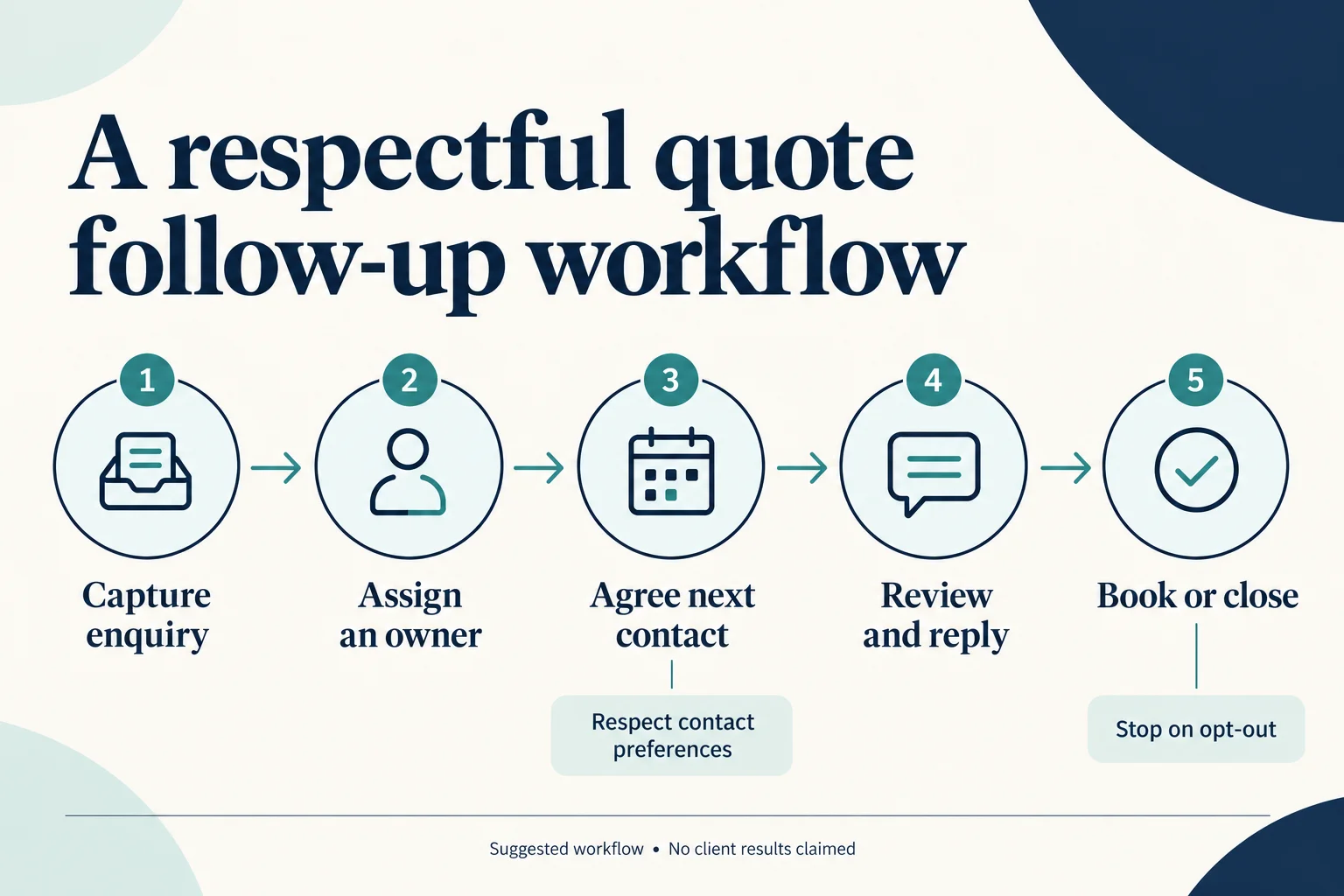
Start with one quote register, one person responsible for each enquiry and a clear next action. Add reminders after those basics work. This guide describes a suggested workflow, not a measured client result or a completed Hossain Consulting installation.
What should a quote register contain?
Record a quote reference, customer contact details, the requested service, the owner, the date sent, the next action and the current stage. Keep notes relevant to the job. Avoid collecting sensitive information that the workflow does not need.
Use a short set of stages such as enquiry received, quote sent, awaiting customer, booked and closed. A closed record should explain whether the customer declined, booked elsewhere or asked for no further contact.
When should you follow up?
Agree on the next contact with the customer when sending the quote. A scheduled CRM task can remind the owner to check whether that contact is still appropriate. There is no universal timing rule: an urgent repair and a renovation quote need different handling.
A polite example is: ‘Hello [first name], this is [name] from [business]. Did you have any questions about quote [reference]? If you would prefer no further follow-up, please let us know.’ This is example wording, not a compliance-approved message template. Assess the purpose, channel and consent before using it.
How do you respect consent and opt-outs?
Distinguish a requested response about a quote from promotional marketing. Do not assume that visiting a website, opening a social profile or requesting one quote gives permission for ongoing marketing. Check applicable Australian spam and privacy rules before sending automated email or SMS.
Store the relevant contact preference, its source and date, and any withdrawal. Honour an opt-out across the tools used for outreach. Stop the sequence when the person declines, withdraws permission or books; do not keep chasing them across channels.
What should automation do?
Begin with internal reminders and a queue for human review. If you later automate customer messages, test the stop conditions first: duplicate records, accepted quotes, closed jobs and opt-outs. Keep a person responsible for exceptions and complaints.
An AI assistant may help draft a reply from approved job information. It should not invent prices, promise availability, approve safety-critical work or expose customer information in an unapproved tool.
How will you know it is working?
Track unanswered enquiries, overdue tasks and quotes with no owner. Use your own baseline before reporting an improvement. Faster replies do not automatically prove more revenue, and example figures should never be presented as customer results.
If you want help mapping this process, the services page explains the current offer and links to an online introductory call. Begin with the workflow and agree on scope before choosing software.
About the author
Hemayet Hossain
Founder of Hossain Consulting | Salesforce & AI Automation
Hemayet Hossain is the Sydney-based founder of Hossain Consulting, a developing CRM and automation practice for trade and home-service businesses. He writes about Salesforce, AI and workflow automation using self-directed demos and practice scenarios, distinguishing tested results from ideas still being explored.